
Description
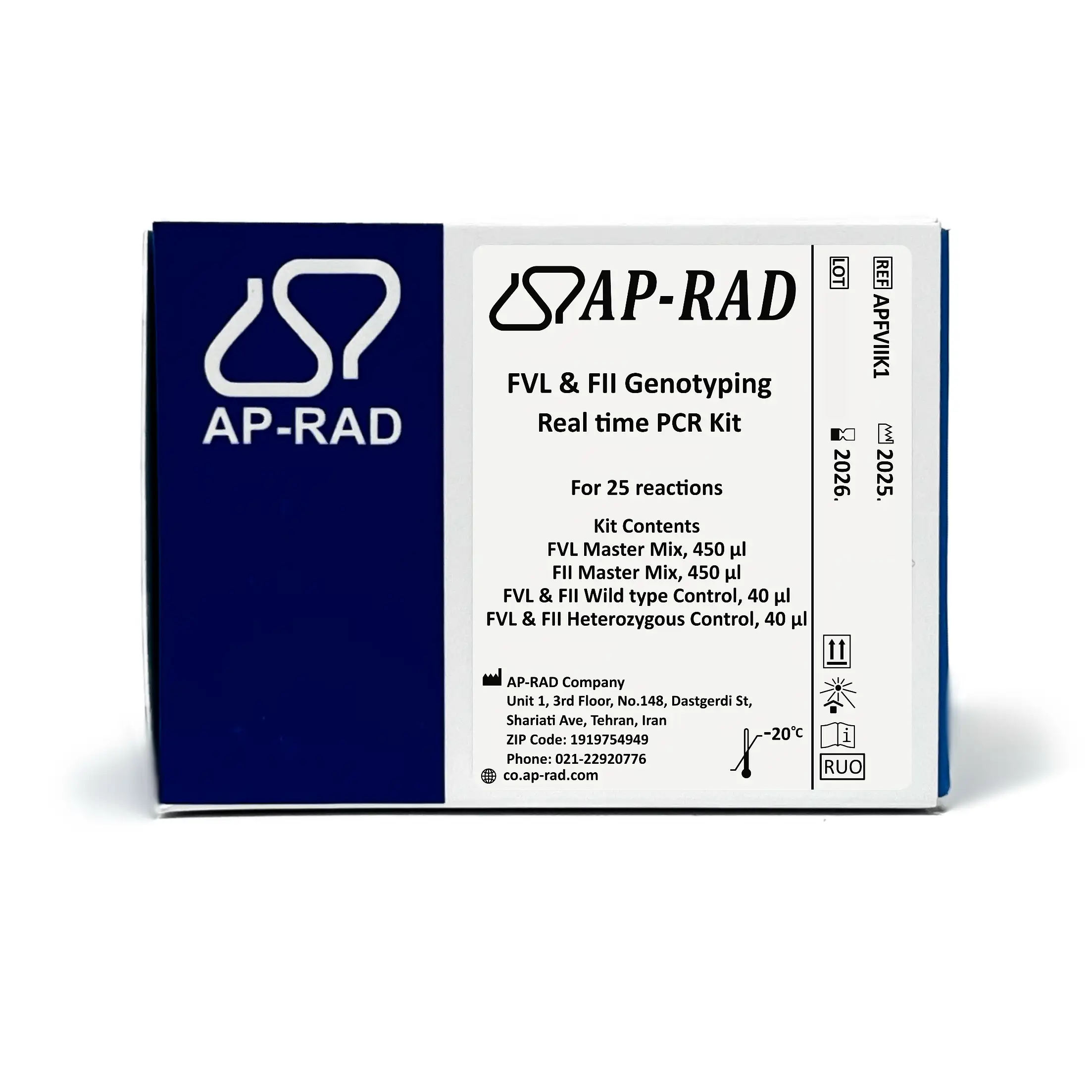
FVL & FII Genotyping Real Time PCR Kit | Factor V Leiden and Factor II Genotyping Real Time PCR Detection Kit
ap-rad product designed and manufactured for rapid, sensitive, and specific detection of two important SNPs associated with hereditary thrombophilia: G506A in the FVL gene (Factor V Leiden) and G20210A in the FII gene (Prothrombin).
Thrombophilia refers to a group of inherited or acquired disorders that predispose an individual to blood clot formation. Affected individuals are at increased risk for VTE (Venous Thromboembolism) disorders including deep vein thrombosis (DVT) and pulmonary embolism (PE).
Acquired Thrombophilia
This type usually occurs under the following conditions:
- Prolonged hospitalization after surgery
- Injuries and trauma to the lower limbs
- Certain types of cancer
- Prolonged immobilization
Hereditary Thrombophilia
The most important genetic causes are the following two mutations, inherited from parents:
- Factor V Leiden (G506A)
- Factor II / Prothrombin (G20210A)
Both genes are key factors in the blood coagulation pathway.
- The FII mutation (G20210A) is associated with increased prothrombin production and enhances blood clotting ability.
- The FVL mutation (G506A) causes structural changes in Factor V, making it resistant to the “protein inhibitor factor”; therefore, the coagulation process increases abnormally.
Prevalence and Clinical Significance
- FVL is the most common hereditary cause of thrombophilia and affects 1 to 5 percent of the population.
- Heterozygous individuals for one of these two mutations are at moderate risk.
- Individuals heterozygous for both genes simultaneously are up to 20 times more susceptible to thrombosis.
- Homozygotes for both genes are very rare but have the highest level of risk.
Kit Application
The FVL & FII Genotyping Real-Time PCR Kit enables simultaneous detection of two key SNPs, G506A and G20210A, with high accuracy and is an effective tool for:
- Thrombosis risk assessment
- Evaluation of patients with a family history of VTE
- Differential diagnosis of hereditary thrombophilia alongside acquired causes
- Decision-making regarding anticoagulant therapies