

Description
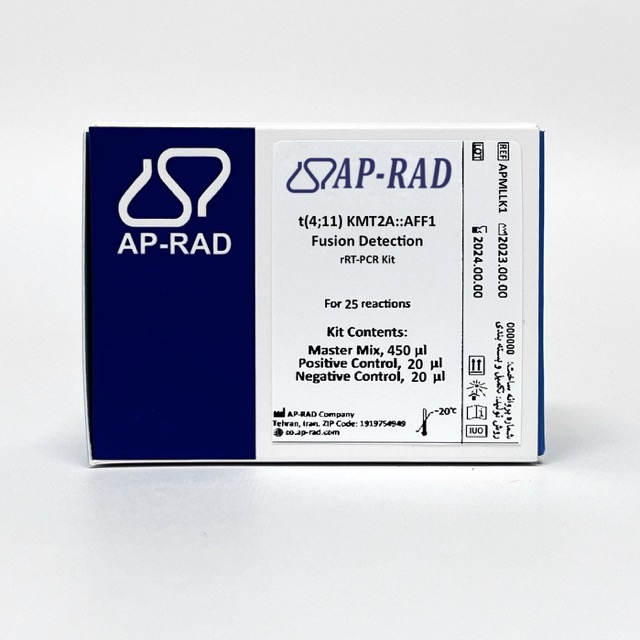
t(4;11) KMT2A::AFF1 Fusion Detection rRT-PCR Kit
The mixed-lineage leukemia (MLL) gene, now known as KMT2A, is located on chromosome 11q23 and undergoes rearrangement in a subset of acute leukemias. This genetic alteration is observed in approximately 10% of acute lymphoblastic leukemia (ALL) cases and about 3% of acute myeloid leukemia (AML) cases.
This gene can fuse with various partners, the most common being AF4 or AFF1, located on chromosome 4q21. This fusion accounts for about 36% of KMT2A (MLL-rearranged) leukemias and 57% of MLL-r ALL cases.
The t(4;11) translocation results in the formation of the KMT2A::AFF1 fusion and has been reported in 5-10% of ALL cases, particularly in children. This genetic abnormality is most prevalent in infants under six months old, constituting approximately 50% of ALL cases in this age group. These patients often present with a Pro B-ALL immunophenotype.
The incidence of this translocation in AML, mainly in M4 and M5 subtypes, is rare.
Leukemias with KMT2A rearrangement (MLL-r) are typically characterized by sudden onset, very rapid progression, and aggressive behavior, carrying a poorer prognosis compared to non-MLL-r cases.
Despite advancements in chemotherapy and hematopoietic stem cell transplantation methods, therapeutic responses in infant, pediatric, and adult patients with this type of leukemia remain unsatisfactory.
The t(4;11) KMT2A::AFF1 Fusion Detection rRT-PCR Kit
Developed by Amir Peyvand Research and Development (AP-RAD), this kit is designed for the rapid, sensitive, and specific detection of the KMT2A::AFF1 fusion. It serves as a valuable tool for accurately diagnosing patients with this translocation and enabling timely selection of appropriate therapeutic strategies.